About Star Coupling
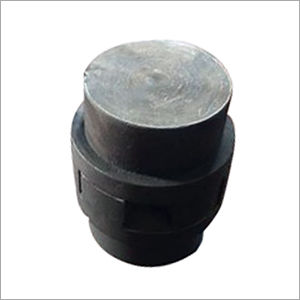
We are a well known manufacturer of Star Coupling in the market. It is a device which takes in an input signal and splits it into several output signals. In fiber optics, and especially in telecommunications, a Star Coupling is a passive optical device, used in network applications. An optical signal introduced into any input port is distributed to all output ports.
Applications and CompatibilityStar Couplings are specifically designed for power transmission tasks, seamlessly connecting motors to pumps or gearboxes in a wide variety of industrial settings. With their flexible star insert, they compensate for shaft misalignments and reduce vibration, ensuring smooth operation and longevity in demanding environments. Their robust construction and compatibility with various bore sizes make them suitable across multiple shaft diameters and machinery types.
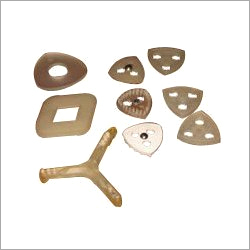
Durable Design and Quality AssuranceManufactured using premium cast iron, steel, or aluminum, and an anti-corrosive surface finish, these couplings stand up to harsh industrial conditions. The polyurethane star insert provides excellent elasticity, effective vibration damping, and temperature resistance between -20C and +80C. All products conform to IS and DIN standards, ensuring reliability and consistent quality for global exporters, manufacturers, suppliers, and wholesalers.
Installation and Maintenance EaseStar Couplings are engineered for user-friendly installation using a simple clamp-fit mechanism. This design not only streamlines the installation process but also facilitates easy removal and maintenance. Their flexibility and anti-corrosive properties minimize downtime while maximizing the longevity of machinery components in your operation.
FAQ's of Star Coupling:
Q: How do Star Couplings enhance the operation of motors and pumps?
A: Star Couplings efficiently transmit torque between shafts, accommodating both axial and radial misalignments. Their flexible polyurethane insert dampens vibrations, which helps protect both the motor and pump from premature wear and mechanical failures, ensuring smoother and more reliable operation.
Q: What is the process for installing a Star Coupling?
A: Installation involves aligning the shafts, sliding the coupling halves onto each shaft, positioning the polyurethane star insert between them, and securing using the clamp-fit mechanism. This tool-free process is straightforward, reducing both installation time and maintenance effort.
Q: Where are these Star Couplings commonly used?
A: These couplings are widely used in various industrial applications across India and internationally, such as in water treatment plants, chemical processing, manufacturing lines, and wherever reliable power transmission between motors, pumps, or gearboxes is needed.
Q: What benefits do the anti-corrosive coating and polyurethane insert provide?
A: The anti-corrosive coating safeguards the coupling against harsh environmental conditions, extending service life. The polyurethane insert offers excellent vibration damping and accommodates misalignments, reducing maintenance needs and promoting stable performance.
Q: When should a star coupling be replaced?
A: Regular inspection is recommended, especially if abnormal noise or excessive vibration occurs. Replacement is typically necessary if the polyurethane star insert shows significant wear or degradation, or if the coupling components exhibit damage or corrosion beyond the protective coating's capabilities.
Q: What standards do these couplings meet, and why is this important?
A: These couplings conform to both IS (Indian Standards) and DIN (German Industry Standards), ensuring they meet strict safety, quality, and performance requirements. Compliance enhances reliability, facilitates global trade, and assures customers of product consistency.
Q: Can Star Couplings accommodate different shaft sizes and operational demands?
A: Yes, with customizable bore sizes ranging from 8 mm to 80 mm and a torque capacity of up to 200 Nm, these couplings are adaptable to various shaft diameters and industrial load requirements, offering flexibility for different machinery configurations.




 Send Inquiry


 Send Inquiry
 Send Inquiry
 Send SMS
 Call Me Free